Healing Leaky Gut for Weight Loss: 2026 Clinical Protocol
For individuals struggling with plateaued weight loss despite strict calorie restriction and strenuous exercise, focusing on healing leaky gut for weight loss has emerged as the missing metabolic imperative. Increased intestinal permeability commonly termed “leaky gut” allows bacterial endotoxins like Lipopolysaccharides (LPS) to cross the gut barrier into systemic circulation. This process triggers chronic low-grade inflammation, induces peripheral insulin resistance, and severely impairs metabolic rate.
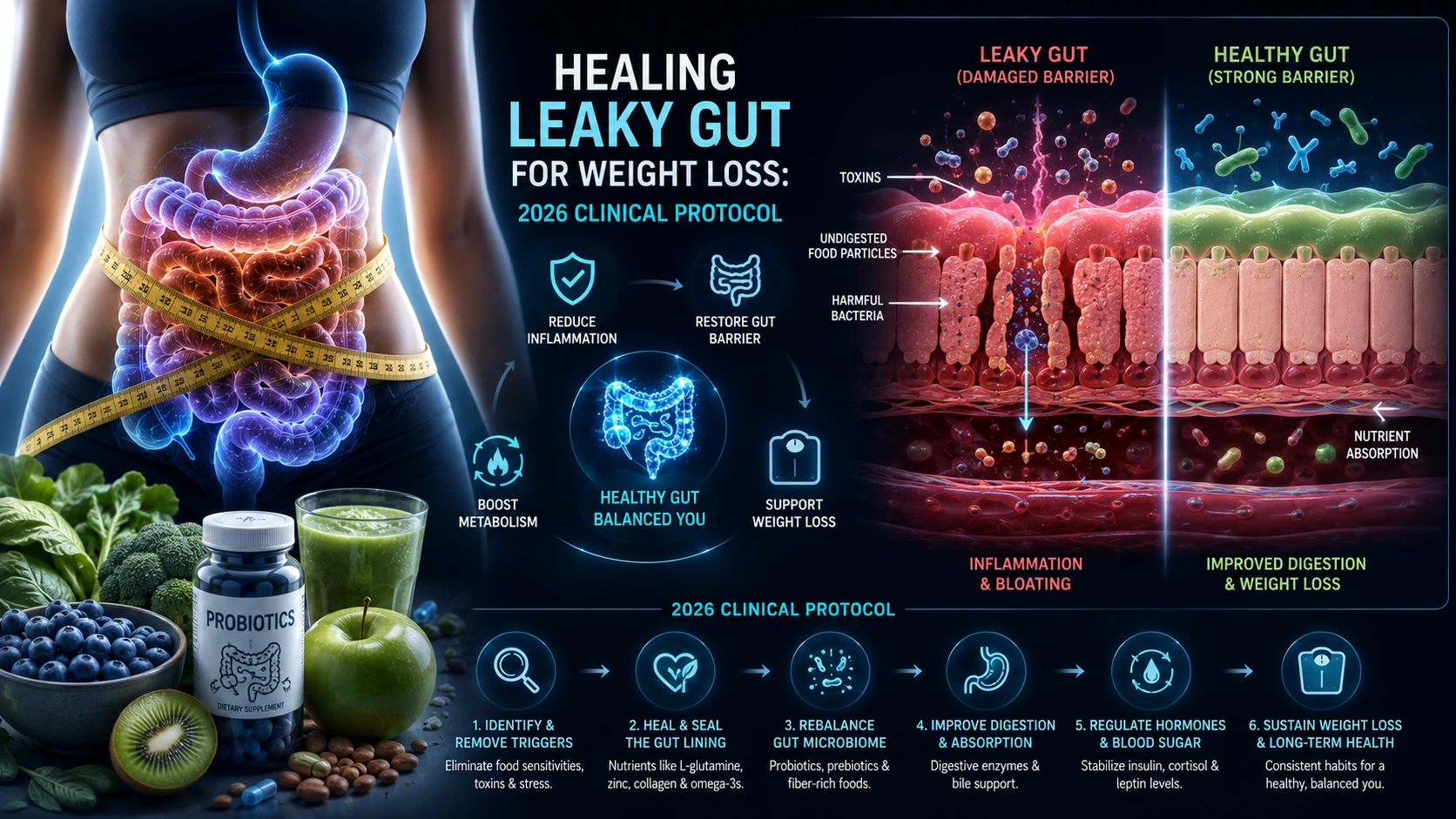
1. The Biology of Metabolic Endotoxemia
Intestinal epithelial cells (enterocytes) are held together by complex protein structures known as tight junctions (comprising Claudins, Occludins, and Zonula Occludens-1). In a healthy gut, this barrier acts as a selective filter, allowing nutrients, water, and essential minerals to pass into the bloodstream while blocking toxins, undigested food particles, and pathogenic bacteria.
When tight junctions degrade, Lipopolysaccharides (LPS) outer membrane components of Gram-negative gut bacteria translocate into the hepatic portal vein. This state, clinically defined as Metabolic Endotoxemia, triggers a systemic inflammatory response. LPS binds to Toll-Like Receptor 4 (TLR4) on immune cells and adipocytes, setting off a cascade of inflammatory cytokines (TNF-alpha, IL-6) that directly block insulin signaling pathways.
Biomarkers of Intestinal Permeability
- Serum Zonulin Levels: High circulating zonulin indicates active opening of tight junctions.
- Plasma LPS / Endotoxin Load: Direct measurement of bacterial translocations entering bloodstream.
- High-Sensitivity C-Reactive Protein (hs-CRP): Marker of low-grade systemic vascular inflammation.
2. Why Healing Leaky Gut for Weight Loss is Essential for Metabolism
Understanding the link between gut permeability and fat retention is crucial. Simply cutting calories in the presence of systemic inflammation leads to muscle loss rather than fat oxidation. Therefore, prior to aggressive calorie deficits, prioritizing healing leaky gut for weight loss addresses the root metabolic drivers of obesity.
Metabolic endotoxemia disrupts weight regulation through three main mechanisms:
- Leptin Resistance: Systemic LPS inflammation crosses the blood-brain barrier to inflame the hypothalamus, blinding the brain to satiety signals sent by fat tissue.
- Mitochondrial Downregulation: Inflammatory cytokines impair mitochondrial fatty acid beta-oxidation, causing cells to store incoming lipids rather than burning them for ATP energy.
- Water Retention & Cortisol Activation: Chronic gut irritation elevates adrenocorticotropic hormone (ACTH), keeping serum cortisol high and promoting fluid accumulation and abdominal fat storage.
To understand how chronic cortisol elevation specifically creates abdominal fat versus transient fluid bloat, review our diagnostic guide on cortisol belly vs bloat visual differences.
3. Molecular Mechanisms: Tight Junction Restorations
When implementing targeted therapies for healing leaky gut for weight loss, clinical repair mechanisms must target both the mucosal layer and cellular protein expression.
L-Glutamine & Fueling Enterocytes
The amino acid L-Glutamine serves as the primary metabolic fuel source for intestinal epithelial cells. Under stress or infection, enterocyte glutamine reserves rapidly deplete, accelerating tight junction breakdown. Supplemental L-Glutamine promotes enterocyte proliferation, increases Occludin expression, and seals mucosal gaps.
Short-Chain Fatty Acids (SCFAs) & Butyrate Signaling
Anaerobic fermentation of dietary prebiotic fibers by beneficial bacteria (such as Faecalibacterium prausnitzii and Akkermansia muciniphila) produces Butyrate. Butyrate feeds colonocytes, upregulates tight junction protein synthesis, and stimulates the production of intestinal mucin (MUC2 layer), rebuilding the protective physical barrier.
For a complete breakdown of microbial fermentation and SCFA pathways, refer to our foundational master pillar guide on gut microbiome endocrinology.
4. The 4R Clinical Protocol for Intestinal Repair
Successfully executing the 4R protocol for healing leaky gut for weight loss guarantees a systematic reduction in systemic endotoxemia within 4 to 8 weeks.
- Remove: Eliminate inflammatory triggers including ultra-processed seed oils, artificial sweeteners, refined sugars, gluten, and unnecessary NSAIDs that erode gastric mucosal lining.
- Replace: Restore digestive secretions by using digestive enzymes and betaine HCl to ensure complete protein breakdown and prevent undigested peptides from irritating enterocytes.
- Reinoculate: Introduce targeted spore-forming probiotics and prebiotic fibers to restore beneficial bacterial balance and displace LPS-producing pathogens.
- Repair: Supply targeted mucosal nutrients including L-Glutamine, Zinc Carnosine, Deglycyrrhizinated Licorice (DGL), and Omega-3 fatty acids to repair tight junction architecture.
5. Full Cluster Ecosystem: Interlinked Guides
Healing the gut barrier is interconnected with glucose control, supplement synergy, and hormone management. Complete your metabolic knowledge with our linked research articles:
Berberine & Magnesium Protocol
Learn how berberine alters gut bacterial composition while magnesium restores cellular energy.
Preventing Glucose Spikes Protocol
Discover food sequencing and enzyme inhibition techniques to smooth postprandial glucose curves.
6. Evidence-Based Supplementation & Nutritional Framework
Following this daily nutritional blueprint for healing leaky gut for weight loss optimizes cellular repair while creating an environment suited for active lipolysis.
| Nutrient / Compound | Clinical Dosage | Mechanism of Action | Metabolic Outcome |
|---|---|---|---|
| L-Glutamine Powder | 5g – 10g daily (fasted) | Provides energetic substrate for enterocyte migration and tight junction synthesis | Seals barrier, reducing circulating endotoxins |
| Zinc Carnosine | 75mg twice daily | Adheres directly to gut ulcerations/erosions, stabilizing mucosal tissue | Prevents NSAID/stress-induced mucosal breakdown |
| Spore Probiotics | 4 Billion CFU (Bacillus species) | Survives gastric acid to colonize lower intestine, competitive inhibition of pathogens | Decreases serum LPS levels by up to 42% |
| Tributyrin (Core Butyrate) | 300mg – 600mg daily | Directly delivers short-chain fatty acids to colon, enhancing intestinal mucin layer | Restores fatty acid oxidation and metabolic rate |
To optimize oral absorption and reduce metabolic inflammation further, combine this mucosal repair framework with our targeted alkaloid strategy outlined in our clinical guide on taking berberine and magnesium together.
For additional peer-reviewed studies regarding metabolic endotoxemia, tight junction physiology, and obesity research, review literature hosted on PubMed Central (NCBI) and leading gastroenterology journals at Nature Medicine.
7. Frequently Asked Questions (FAQ)
How long does healing leaky gut for weight loss typically take?
The timeline for healing leaky gut for weight loss varies between 4 to 12 weeks. Epithelial lining cells regenerate every 3 to 5 days, but reversing chronic systemic metabolic endotoxemia requires consistent dietary repair and targeted supplementation over several weeks.
Can leaky gut cause weight gain even if I eat healthy?
Yes. If tight junctions are compromised, bacterial endotoxins enter the blood and trigger systemic inflammation, which causes leptin resistance and suppresses metabolic rate regardless of caloric intake.
What is the single best supplement for intestinal permeability?
L-Glutamine powder combined with Zinc Carnosine offers the most direct clinical support for rebuilding mucosal integrity and sealing tight junction gaps.