Cortisol Belly vs. Bloat: Visual Differences & 2026 Protocols
Evaluating the cortisol belly vs bloat visual difference is one of the most frequent clinical challenges in digestive and metabolic health. While both conditions cause abdominal protrusion, their underlying etiology, physiological composition, and daily fluctuations are vastly different. Cortisol belly is driven by chronic hypothalamic-pituitary-adrenal (HPA) axis activation leading to deep visceral adiposity. Abdominal bloat, conversely, is caused by gastrointestinal gas accumulation, delayed gastric emptying, and intestinal dysbiosis.
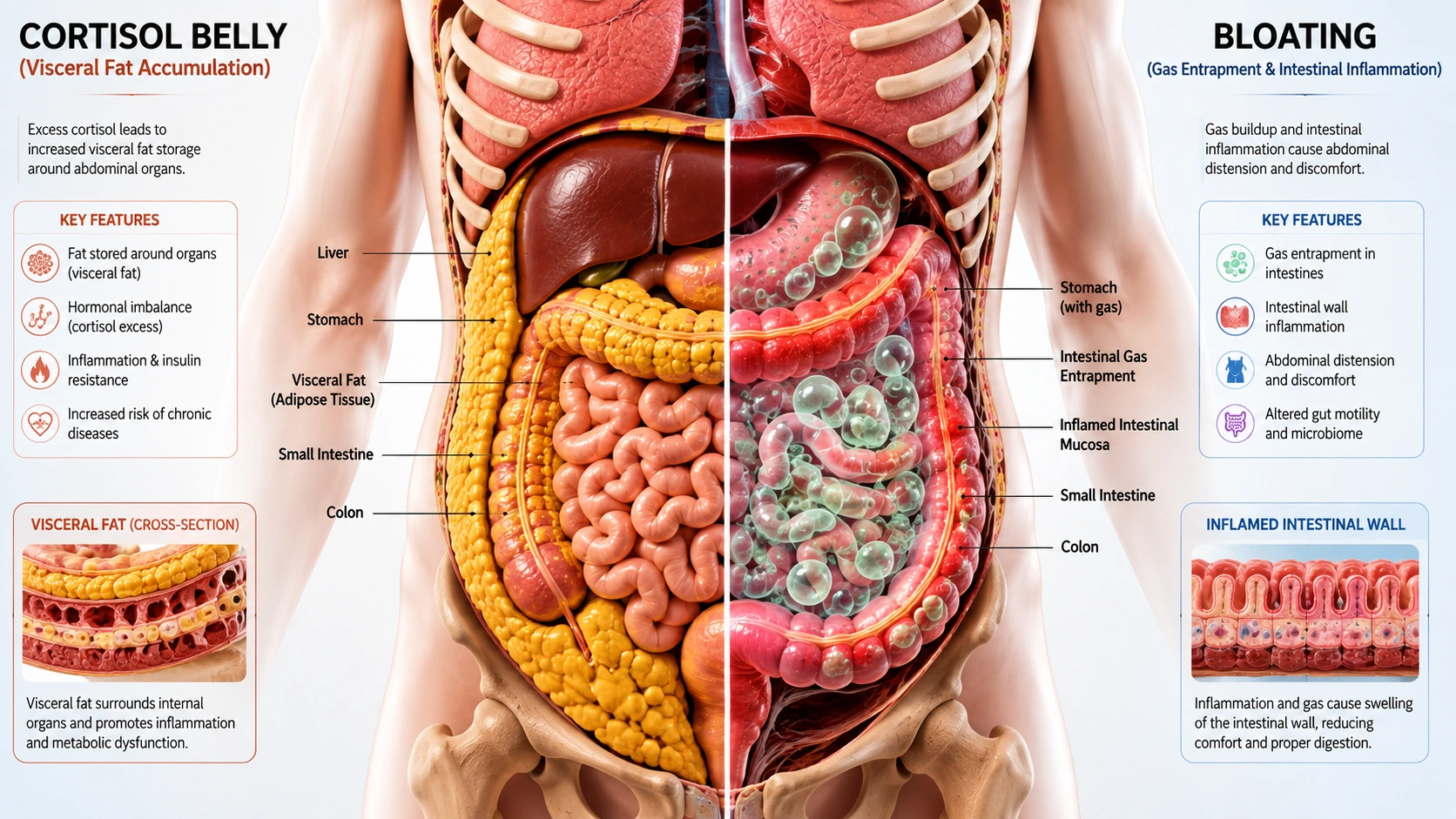
1. Visual and Tactile Diagnostics: Cortisol Belly vs. Bloat
To accurately distinguish the cortisol belly vs bloat visual difference, clinicians rely on three primary diagnostic criteria: tissue consistency, diurnal (time-of-day) variation, and anatomical distribution.
1. Tissue Consistency and Palpation
- Cortisol Belly (Visceral Fat): Feels firm to the touch deep beneath the abdominal wall, though the overlying subcutaneous layer may feel soft. It does not compress easily because visceral adipose tissue surrounds vital internal organs underneath the peritoneal membrane.
- Abdominal Bloat (Gas/Fluid): Tends to feel stretched, tight, and distended—similar to an inflated balloon. Palpation often yields a tympanic (hollow/drum-like) sound upon percussion due to trapped intestinal gas.
2. Diurnal Fluctuation (Time of Day)
- Cortisol Belly: Remains constant throughout the day. You wake up with it and go to sleep with it; its volume does not dramatically alter within a few hours following a meal.
- Abdominal Bloat: Highly variable. Individuals typically wake up with a relatively flat stomach (“morning flat”), with abdominal circumference increasing progressively following meals, peaking in the evening.
To learn how systemic inflammation and gut permeability contribute to both bloating and metabolic weight gain, explore our master guide on metabolic health and gut microbiome architecture.
2. The Endocrinology of Cortisol Belly & Visceral Adiposity
Cortisol belly is a metabolic manifestation of prolonged elevated glucocorticoids. Chronic psychological stress, sleep deprivation, or severe caloric restriction activates the HPA axis, signaling the adrenal cortex to release sustained levels of cortisol.
Visceral adipose tissue (VAT) expresses a significantly higher density of Glucocorticoid Receptors (GR) and higher activity of the enzyme 11β-Hydroxysteroid Dehydrogenase Type 1 (11β-HSD1) compared to subcutaneous fat. This enzyme locally converts inactive cortisone into active cortisol within visceral fat cells, selectively directing lipid storage to the omentum and mesentery surrounding abdominal organs.
How Cortisol Impairs Insulin Sensitivity
Sustained cortisol elevation mobilizes amino acids from muscle tissue and activates hepatic gluconeogenesis, causing chronic baseline blood sugar elevation. Over time, this triggers secondary hyperinsulinemia, inhibiting lipolysis (fat burning) and locking visceral fat in place.
3. The Gastroenterology of Bloating & Gut Dysbiosis
Unlike visceral adiposity, bloating is a mechanical and functional symptom originating inside the lumen of the gastrointestinal tract. Primary causes include:
- Small Intestinal Bacterial Overgrowth (SIBO): Unwanted bacterial colonization in the small intestine ferments dietary carbohydrates prematurely, releasing excess hydrogen and methane gas.
- Impaired Migrating Motor Complex (MMC): Sluggish intestinal peristalsis allows digestive debris and gas to linger in the digestive tract.
- Low Microbial Diversity: A lack of commensal short-chain fatty acid producers weakens mucosal integrity, leading to low-grade gut inflammation and localized fluid retention.
For individuals managing both stress-induced metabolic dysfunction and digestive motility issues, our berberine and magnesium supplementation protocol provides targeted dual action for microbial balance and nervous system relaxation.
4. Diagnostic Comparison Matrix
The following clinical matrix highlights the key differences between cortisol belly and intestinal bloat:
| Diagnostic Feature | Cortisol Belly (Visceral Fat) | Abdominal Bloat (Gas / Distension) |
|---|---|---|
| Primary Composition | Visceral Adipose Tissue (Adipocytes) | Entrapped Gas (H2, CH4, CO2) & Fluid |
| Daily Pattern | Static (No noticeable change day to night) | Dynamic (Flat in morning, expands post-meals) |
| Touch & Palpation | Firm depth, soft surface, non-tender | Taut, drum-like, often tender or uncomfortable |
| Primary Serum Biomarker | Elevated Salivary/Serum Cortisol & Triglycerides | Elevated Breath Hydrogen/Methane or Fecal Calprotectin |
5. Targeted Clinical Protocols for Reduction
Protocol for Cortisol Belly (Visceral Fat Reduction)
- HPA-Axis Downregulation: Implement adaptogenic botanicals such as standardized Ashwagandha (KSM-66) (600 mg daily) or Phosphatidylserine (300 mg before bed) to blunt nocturnal cortisol surges.
- Low-Glycemic Energy Structure: Eliminate refined carbohydrates that trigger rapid insulin spikes, preventing 11β-HSD1 enzyme upregulation in visceral fat tissue.
- Zone 2 Cardiovascular Training: Engage in low-intensity steady-state cardio (130–140 bpm) to promote lipid oxidation without triggering secondary adrenal stress.
Protocol for Abdominal Bloat Reduction
- Prokinetic Support: Utilize natural prokinetics such as standardized Ginger Root Extract (500 mg) and Artichoke Leaf Extract before meals to stimulate the Migrating Motor Complex (MMC).
- Temporary Low-FODMAP Phase: Reduce fermentable oligosaccharides, disaccharides, monosaccharides, and polyols for 2 to 4 weeks to starve fermentative microbial populations.
- Osmotic Electrolyte Balance: Ensure adequate dietary potassium and magnesium intake to maintain proper cellular fluid distribution.
Discover broader lifestyle and dietary protocols in our dedicated lifestyle and longevity directory.
6. Authoritative References & Clinical Citations
For additional peer-reviewed research regarding cortisol biochemistry, visceral adiposity, and functional gut disorders, consult these official biomedical resources:
- Read endocrine research regarding cortisol receptors and visceral fat on PubMed Central (NCBI).
- Review diagnostic guidelines on functional gastrointestinal disorders from the American Gastroenterological Association (AGA).
7. Frequently Asked Questions (FAQ)
Can you have both cortisol belly and bloat at the same time?
Yes. Chronic stress elevates cortisol, which directly impairs gut motility and reduces mucosal blood flow, frequently resulting in secondary intestinal dysbiosis and bloating on top of visceral fat accumulation.
How long does it take to lose a cortisol belly?
Visceral fat is metabolically active and often mobilizes faster than subcutaneous fat once stress management and low-glycemic dietary protocols are established, typically showing measurable reduction within 4 to 8 weeks.
Does drinking apple cider vinegar help with cortisol belly or bloat?
Apple cider vinegar helps primarily with bloat by stimulating stomach acid (HCl) production and delaying postprandial glucose spikes, but it has no direct cellular effect on cortisol reduction or visceral fat storage.