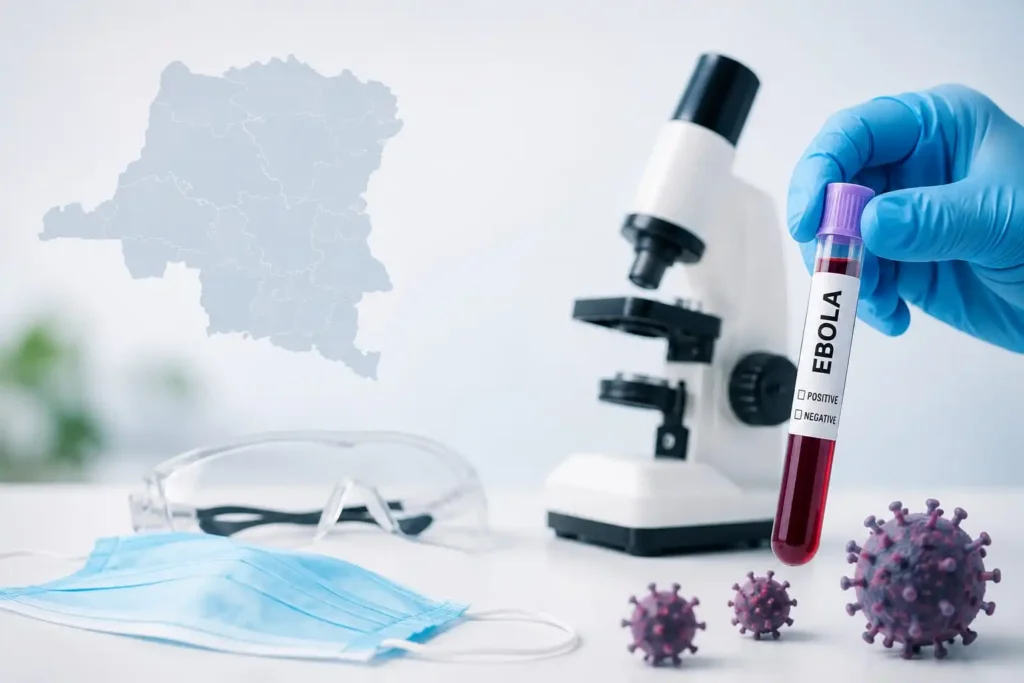
7 Essential Facts About Ebola in the Democratic Republic of the Congo: Symptoms, Causes, Treatment & Prevention
Healthcare professionals responding to Ebola in the Democratic Republic of the Congo.When people hear the word Ebola, they often think of one of the world’s deadliest infectious diseases…
When people hear the word Ebola, they often think of one of the world’s deadliest infectious diseases. While this reputation is understandable, modern medicine has made remarkable progress in detecting, treating, and preventing the virus. Understanding Ebola in the Democratic Republic of the Congo is important because the country has experienced more Ebola outbreaks than any other nation and has become a global center for research, vaccination, and outbreak response.
Over the past several decades, Ebola in the Democratic Republic of the Congo has challenged doctors, researchers, and public health authorities. Each outbreak has provided valuable scientific knowledge that has improved emergency response systems worldwide. Today, healthcare teams can identify infections much faster, isolate patients earlier, and use vaccines that were unavailable only a few years ago.
Despite these medical advances, Ebola in the Democratic Republic of the Congo remains a serious public health concern. Remote forests, close contact with wildlife, limited healthcare access in some provinces, and humanitarian crises continue to create conditions where new outbreaks can occur. This is why public awareness remains just as important as scientific research.
In this complete guide, you will learn everything about Ebola in the Democratic Republic of the Congo, including how the virus spreads, its symptoms, available treatments, vaccines, prevention methods, and the role of international organizations in controlling future outbreaks. Whether you are looking for medical information, educational resources, or reliable health guidance, this article provides evidence-based information in a simple and easy-to-understand format.
What Is Ebola Virus Disease?
Ebola in the Democratic Republic of the Congo refers to infections caused by viruses belonging to the Ebolavirus genus. Ebola Virus Disease (EVD) is a severe viral illness that affects both humans and certain wild animals, including gorillas, chimpanzees, and monkeys. Scientists believe that fruit bats serve as the natural reservoir of the virus, allowing Ebola to survive in nature without causing widespread disease among bat populations.
Unlike seasonal influenza or COVID-19, Ebola does not spread through the air. Instead, infection occurs through direct contact with infected blood, saliva, vomit, urine, feces, breast milk, semen, or other body fluids. Contact with contaminated medical equipment or unsafe burial practices may also spread the disease.
Early recognition of Ebola in the Democratic Republic of the Congo has become one of the most important factors in reducing deaths. Modern laboratories can confirm infections rapidly, allowing healthcare teams to isolate patients, begin treatment immediately, and trace individuals who may have been exposed.
Quick Facts About Ebola
| Category | Information |
|---|---|
| Disease | Ebola Virus Disease (EVD) |
| Virus Family | Ebolavirus |
| Natural Reservoir | Fruit bats |
| First Identified | 1976 |
| Mainly Affected Country | Democratic Republic of the Congo |
| Transmission | Direct contact with infected body fluids |
| Incubation Period | 2–21 days |
| Prevention | Vaccination, hygiene, early isolation, contact tracing |
History of Ebola in the Democratic Republic of the Congo
The story of Ebola in the Democratic Republic of the Congo began in 1976 when doctors investigated a mysterious illness causing high fever, severe weakness, and unexplained deaths in northern Zaire, now known as the Democratic Republic of the Congo. Scientists later identified a completely new virus and named it after the nearby Ebola River. This discovery marked the beginning of decades of scientific research that transformed global infectious disease surveillance.
Since that first outbreak, Ebola in the Democratic Republic of the Congo has appeared multiple times in different provinces. Some outbreaks were relatively small and quickly contained, while others infected thousands of people and attracted worldwide attention. Every outbreak has improved medical knowledge, helping scientists develop faster diagnostic tests, effective vaccines, and more advanced treatment methods.
One of the largest outbreaks occurred between 2018 and 2020 in eastern Congo. Health workers faced enormous challenges due to armed conflict, difficult geography, misinformation, and attacks on medical facilities. Despite these obstacles, vaccination campaigns and improved emergency response eventually brought the outbreak under control, demonstrating how coordinated international cooperation can save lives.
Today, Ebola in the Democratic Republic of the Congo remains one of the most carefully monitored infectious diseases in the world. Specialized surveillance systems continuously search for suspected cases so that outbreaks can be detected and contained as early as possible.
Why Does Ebola Keep Returning to the Democratic Republic of the Congo?
Many people ask why Ebola in the Democratic Republic of the Congo continues to reappear while other countries experience very few outbreaks. The answer lies in a unique combination of environmental, ecological, and public health factors.
The country contains one of Africa’s largest tropical rainforests, home to thousands of wildlife species. Scientists believe fruit bats naturally carry Ebola viruses without becoming seriously ill. Occasionally, the virus passes from bats to other wild animals such as monkeys or antelopes. Humans may then become infected while hunting, preparing, or consuming infected bushmeat.
Another important reason is the country’s enormous size. Many villages are located far from hospitals, making it difficult for patients to receive rapid diagnosis and treatment. During this delay, infected individuals may unknowingly transmit the virus to family members, caregivers, or healthcare workers.
Humanitarian emergencies also increase the difficulty of controlling Ebola in the Democratic Republic of the Congo. Population displacement, limited transportation, and insecurity in some regions can delay outbreak investigations and reduce access to medical services.
How Ebola Spreads
Contrary to common myths, Ebola in the Democratic Republic of the Congo is not an airborne disease. People cannot become infected simply by breathing the same air as an Ebola patient. Instead, transmission requires direct contact with infectious body fluids.
The virus may spread through blood, vomit, saliva, urine, feces, sweat, breast milk, semen, or contaminated medical equipment. Healthcare workers therefore wear full personal protective equipment (PPE) when treating Ebola patients to reduce the risk of infection.
Traditional funeral ceremonies have also contributed to previous outbreaks because family members may touch or wash the body of someone who died from Ebola. Today, trained burial teams use safe and respectful procedures that protect both families and communities.
People infected with Ebola in the Democratic Republic of the Congo usually become contagious only after symptoms appear. As the illness becomes more severe, the amount of virus in body fluids increases, making transmission more likely without appropriate protective measures.
Main Routes of Transmission
| Source | Risk Level |
|---|---|
| Blood contact | Very High |
| Vomit or diarrhea | Very High |
| Contaminated needles | Very High |
| Unsafe burial practices | High |
| Contaminated clothing or bedding | Moderate |
| Casual conversation | No Risk |
| Airborne transmission | No Evidence |
Symptoms of Ebola in the Democratic Republic of the Congo
Recognizing the early signs of Ebola in the Democratic Republic of the Congo can save lives. The disease usually develops between 2 and 21 days after exposure to the virus, although most infected people begin showing symptoms within one week. Because the first symptoms resemble malaria, typhoid fever, or influenza, laboratory testing is essential for confirming the diagnosis.
The illness often starts suddenly with a high fever, severe headache, muscle pain, chills, and overwhelming fatigue. As the virus spreads throughout the body, patients may develop vomiting, diarrhea, abdominal pain, sore throat, skin rash, and dehydration. Without immediate medical treatment, the infection can damage the liver, kidneys, and other organs.
Although Ebola is often described as a hemorrhagic fever, not every patient experiences severe bleeding. However, advanced cases of Ebola in the Democratic Republic of the Congo may include internal bleeding, bleeding from the gums, nose, or digestive tract, making emergency medical care essential.
Common Symptoms of Ebola
| Early Symptoms | Advanced Symptoms |
|---|---|
| High fever | Persistent vomiting |
| Severe headache | Severe diarrhea |
| Muscle pain | Abdominal pain |
| Extreme weakness | Dehydration |
| Sore throat | Skin rash |
| Loss of appetite | Internal or external bleeding (some patients) |
| Chills | Organ failure in severe cases |
How Doctors Diagnose Ebola
Because the symptoms of Ebola in the Democratic Republic of the Congo resemble many other tropical diseases, healthcare providers rely on laboratory testing rather than symptoms alone. Doctors first ask about recent travel, contact with infected individuals, and possible exposure to wildlife before collecting blood samples for testing.
The most reliable diagnostic method is the Reverse Transcription Polymerase Chain Reaction (RT-PCR) test, which detects Ebola virus genetic material. Rapid laboratory confirmation allows healthcare teams to isolate patients, begin supportive treatment immediately, and identify anyone who may have been exposed.
Additional laboratory methods such as antigen detection tests, antibody tests, and genomic sequencing help scientists monitor outbreaks and identify the specific Ebola virus strain responsible for each infection.
Treatment for Ebola
There is currently no single medication that instantly cures Ebola in the Democratic Republic of the Congo. However, modern treatment has dramatically improved survival rates. Patients who receive early medical care have a much better chance of recovery than those treated late in the illness.
Supportive treatment includes intravenous fluids, electrolyte replacement, oxygen therapy when necessary, blood pressure monitoring, nutritional support, and treatment of secondary infections. Healthcare professionals continuously monitor patients in specialized Ebola treatment centers equipped with strict infection-control measures.
Several monoclonal antibody therapies have also shown excellent results against the Zaire strain of Ebola virus. Combined with high-quality supportive care, these medicines have significantly reduced mortality during recent outbreaks in the Democratic Republic of the Congo.
| Treatment | Purpose |
|---|---|
| Intravenous fluids | Prevent dehydration |
| Electrolyte replacement | Maintain normal body function |
| Oxygen therapy | Support breathing |
| Monoclonal antibodies | Fight the Ebola virus |
| Blood pressure support | Prevent shock |
| Nutritional care | Improve recovery |
How to Prevent Ebola in the Democratic Republic of the Congo
Preventing Ebola in the Democratic Republic of the Congo requires cooperation between individuals, healthcare professionals, governments, and international organizations. Although Ebola is a dangerous disease, it can often be contained quickly when communities recognize symptoms early and follow public health recommendations.
Health experts recommend avoiding direct contact with blood or body fluids from infected individuals, practicing regular hand hygiene, and immediately reporting suspected cases to local health authorities. Healthcare workers must wear personal protective equipment (PPE) whenever caring for patients with suspected or confirmed Ebola.
Communities are also encouraged to avoid handling sick or dead wild animals, especially fruit bats, monkeys, and other wildlife that may carry the virus. Cooking meat thoroughly and following food safety recommendations further reduce the risk of infection.
These prevention measures have helped reduce the impact of Ebola in the Democratic Republic of the Congo and remain essential during every outbreak response.
Prevention Checklist
| Prevention Method | Effectiveness |
|---|---|
| Wash hands frequently | ★★★★★ |
| Avoid contact with body fluids | ★★★★★ |
| Wear protective equipment (PPE) | ★★★★★ |
| Safe burial practices | ★★★★★ |
| Vaccination of close contacts | ★★★★★ |
| Rapid laboratory testing | ★★★★☆ |
| Community awareness campaigns | ★★★★☆ |
Ebola Vaccines: A Major Medical Breakthrough
One of the biggest advances in controlling Ebola in the Democratic Republic of the Congo has been the development of effective vaccines. Before vaccines became available, healthcare workers relied mainly on patient isolation and contact
Final Thoughts
Although Ebola in the Democratic Republic of the Congo remains one of the world’s most serious infectious diseases, remarkable progress has been achieved over the past decades. Faster laboratory testing, improved surveillance systems, effective vaccines, and advanced medical treatments have significantly reduced the impact of many outbreaks.
Understanding Ebola in the Democratic Republic of the Congo helps individuals recognize symptoms early, follow prevention recommendations, and support public health efforts that protect families and communities. Scientific research continues to improve our ability to respond quickly whenever new cases are detected.
Knowledge is one of the strongest tools against infectious diseases. By staying informed through reliable medical sources and following official health recommendations, everyone can contribute to reducing the spread of Ebola and protecting vulnerable populations.
Key Facts at a Glance
| Topic | Summary |
|---|---|
| Disease | Ebola Virus Disease (EVD) |
| Primary Reservoir | Fruit bats |
| Main Transmission | Direct contact with infected body fluids |
| Incubation Period | 2–21 days |
| Diagnosis | RT-PCR laboratory testing |
| Treatment | Supportive care and monoclonal antibody therapies |
| Vaccine | Available for the Zaire strain |
| Best Prevention | Early detection, vaccination, hygiene, and isolation |
Related Article
Want to learn more about recent Ebola developments? Read our detailed report covering the latest updates on the Bundibugyo outbreak:
👉 Bundibugyo Ebola Outbreak 2026 – Latest Updates and Public Health Response
Trusted Health Resources
Medical Disclaimer
The information provided in this article is intended for educational and informational purposes only. While every effort has been made to ensure accuracy, AppleVita does not guarantee that all information is complete, current, or free from errors.
This content is based on publicly available information and guidance published by recognized health authorities, including the World Health Organization (WHO), the Centers for Disease Control and Prevention (CDC), and other trusted medical organizations. It should not be considered a substitute for professional medical advice, diagnosis, or treatment.
AppleVita and its authors are not responsible for any decisions, actions, or consequences resulting from the use of the information presented in this article. Always consult a qualified healthcare professional for medical advice regarding any health condition.
Thank You for Reading
❤️ Thank you for visiting AppleVita. We are committed to providing reliable, easy-to-understand health information based on trusted medical sources. If you found this article helpful, consider exploring our other health guides and sharing this page with friends and family. Together, we can help spread accurate health knowledge and promote healthier communities.