Health Tech: 10 Powerful Ways Smart Devices Are Reprogramming Our Daily Habits
Discover how smartwatches, fitness trackers, smart rings, AI, connected health devices, and digital tools are changing the way we move, sleep, monitor health, and build everyday habits.
What Is Health Tech and Why Is It Important?
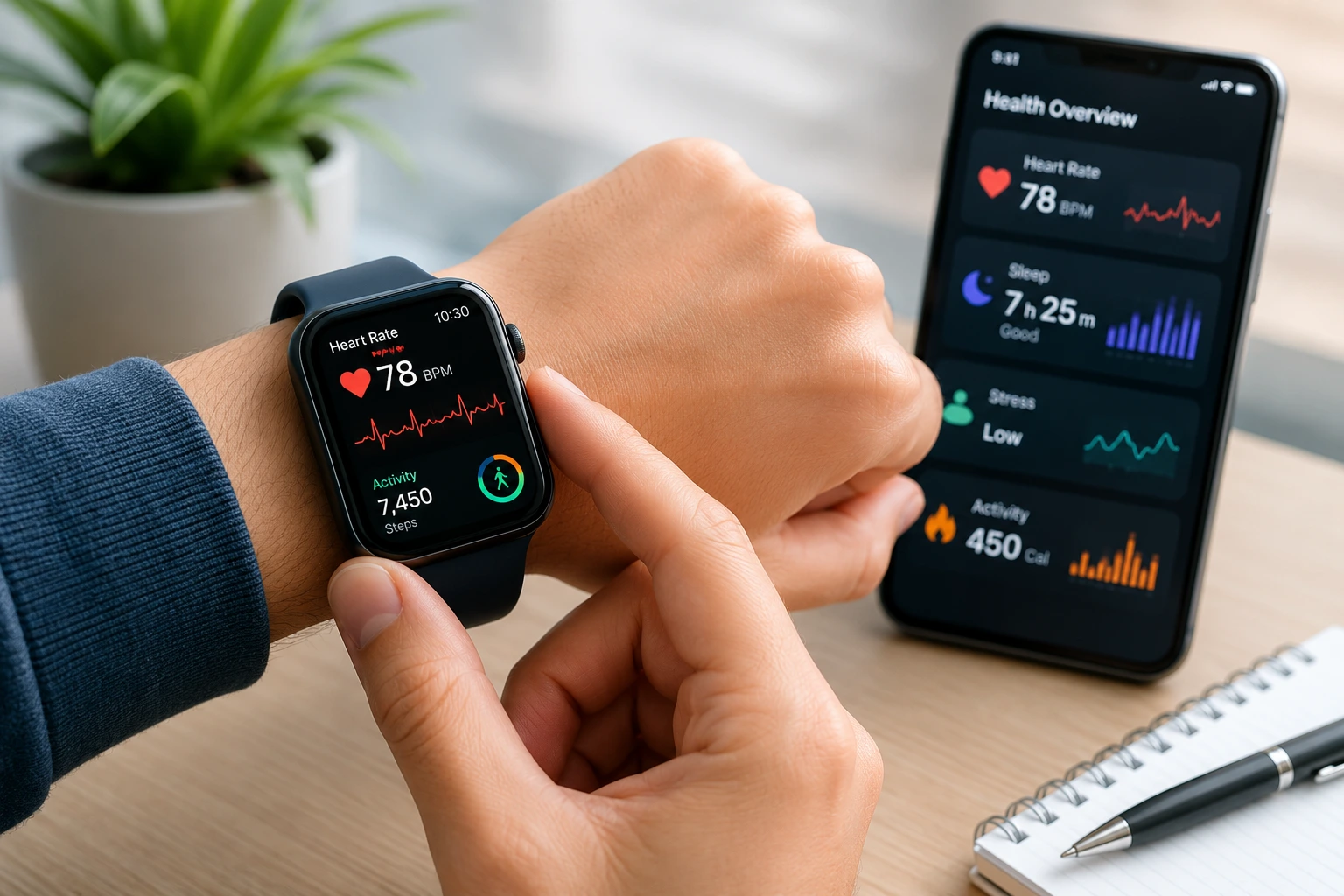
Health Tech is a broad term covering technologies designed to support health, wellness, healthcare delivery, monitoring, prevention, diagnosis, treatment, or health-related decision-making. It includes wearable devices, mobile health applications, connected medical equipment, telehealth platforms, digital therapeutics, remote patient monitoring, artificial intelligence, and health information systems. The U.S. Food and Drug Administration explains that digital health can include mobile health, wearable devices, telehealth, software, sensors, and artificial intelligence. This distinction matters because not every health-related device is a medical device.
The modern growth of Health Tech also reflects a larger transformation in healthcare. Instead of collecting health information only during occasional appointments, digital technologies can collect certain types of information continuously or repeatedly. This can create a more detailed picture of everyday behavior. The World Health Organization emphasizes that digital health has significant potential, while also highlighting evidence, equity, interoperability, privacy, and responsible implementation.
10 Powerful Ways Health Tech Is Changing Daily Habits
- Smart devices make invisible habits easier to see.
- Reminders can encourage movement and healthier routines.
- Sleep technology can reveal broad behavioral patterns.
- AI can make digital health experiences more personalized.
- Health data should support—not replace—professional care.
1. Smartwatches Encourage More Movement
Smartwatches have become one of the most recognizable examples of Health Tech because they combine activity tracking, notifications, workouts, heart-rate monitoring, and other features in one device. Movement reminders can interrupt long periods of sitting and encourage short bursts of activity. The CDC recommends that adults get at least 150 minutes of moderate-intensity physical activity each week along with muscle-strengthening activities on at least two days each week. A wearable cannot guarantee that someone reaches those goals, but it can make activity more visible.
2. Fitness Trackers Make Activity Visible
Fitness trackers transform movement into measurable information. Steps, active minutes, workouts, and distance can show how daily behavior changes over time. This awareness can encourage practical changes such as walking after lunch, taking stairs, parking farther away, or adding short movement breaks. There is no universal step count that automatically defines perfect health, so the goal should not be to become obsessed with one number. The better approach is to use tracking to identify patterns and build sustainable habits.
3. Health Tech Improves Sleep Awareness
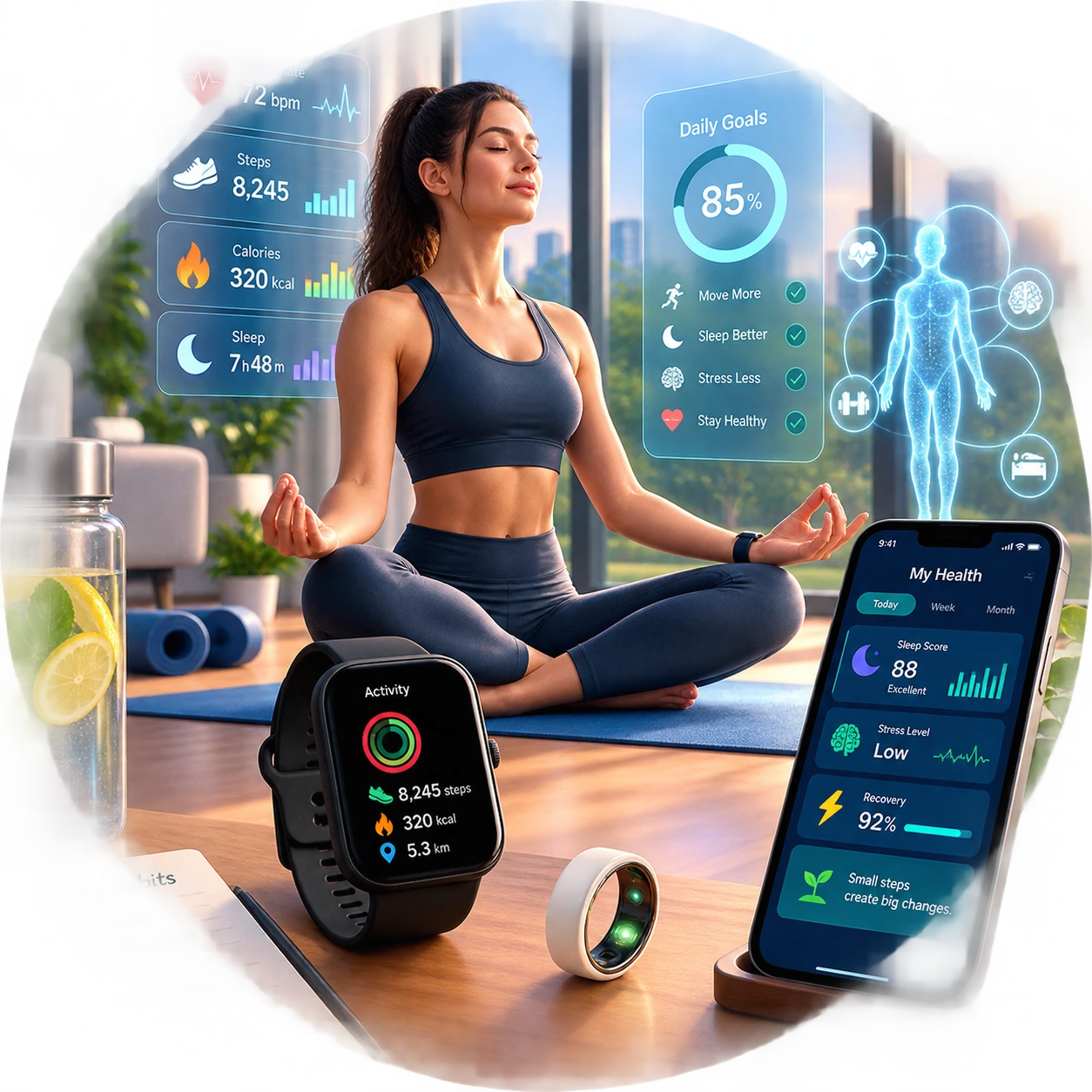
Sleep tracking has become another major area of Health Tech. Smartwatches, smart rings, smartphones, and specialized sleep devices can estimate sleep duration, nighttime movement, and other signals. The biggest benefit may be awareness. Someone might discover that their bedtime becomes consistently later when work runs late or when evening routines become irregular. This information can encourage practical changes. However, consumer sleep trackers should not automatically be treated as diagnostic tools.
4. Smart Rings Make Health Monitoring More Passive
Smart rings represent another direction for Health Tech. Their small size allows them to remain on the body with minimal interaction. Depending on the product, they may provide information related to sleep, activity, heart rate, temperature trends, or recovery. Their appeal is that users do not necessarily need to constantly interact with a screen. The device can collect information in the background and present trends later.
5. Health Tech Supports Heart Health Awareness
Heart-rate monitoring is one of the most widely recognized features of wearable Health Tech. Heart rate naturally changes with exercise, stress, sleep, illness, temperature, and many other factors. Monitoring trends can help people understand how their bodies respond to exercise and recovery. Some devices also provide specific heart-rhythm features depending on the product and its regulatory status. However, a wearable alert does not automatically mean that a person has a heart condition.
6. Connected Glucose Monitoring Provides Continuous Information
Continuous glucose monitoring is one of the more medically focused applications of Health Tech. CGM systems use sensors to monitor glucose levels and display trends over time. These systems are particularly important for people with diabetes and may be used in other situations under appropriate medical guidance. Unlike an isolated measurement, continuous monitoring can show how glucose changes in relation to meals, activity, medication, illness, and other factors.
7. Health Applications Create Personalized Routines
Smartphones have become powerful Health Tech platforms because people already carry them almost everywhere. Health applications can support exercise tracking, medication reminders, nutrition records, symptom journals, mindfulness, sleep routines, and other health activities. When applications connect with wearable devices, users can see several categories of information in one place. Consumers should nevertheless review privacy policies and understand what information an app collects and how it is used.
8. Artificial Intelligence Makes Health Tech More Personalized
Artificial intelligence is becoming an increasingly important part of Health Tech because algorithms can process large amounts of information and identify patterns. AI can help analyze sensor signals, classify activities, summarize trends, personalize reminders, and support certain healthcare workflows. Personalization is attractive because people respond differently to the same routine. However, AI predictions are not automatically correct, and human judgment remains essential.
9. Remote Monitoring Brings Healthcare Beyond the Clinic
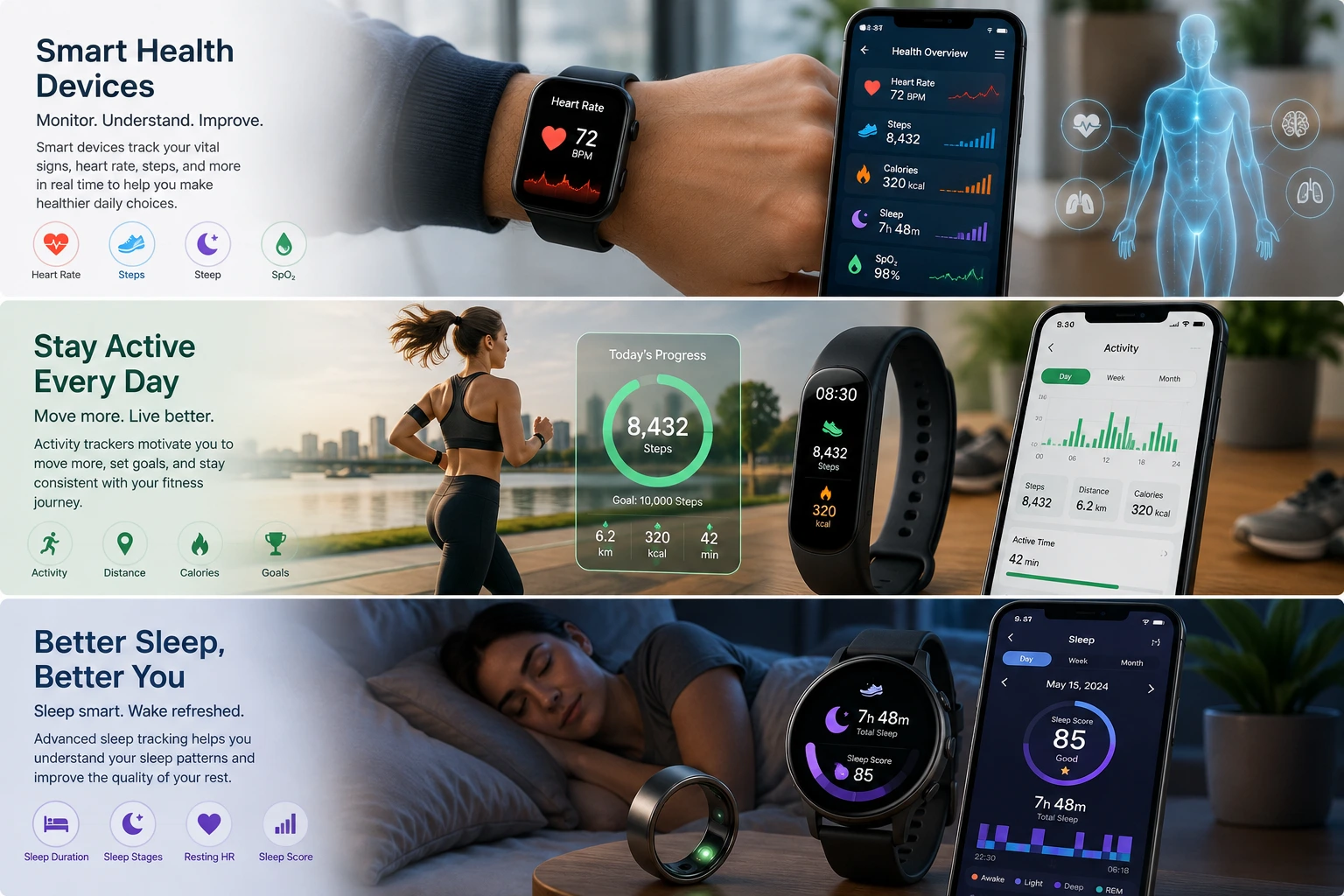
Remote patient monitoring is another important area of Health Tech. Connected devices can allow certain health measurements to be collected outside traditional clinical environments. Depending on the technology and medical situation, information may be shared with healthcare teams for monitoring and follow-up. This can be useful when frequent measurements are clinically appropriate. Data security, device accuracy, patient understanding, and access to technology all remain important.
10. Digital Health Encourages Preventive Thinking
Perhaps the most important long-term contribution of Health Tech is greater awareness. Prevention can be difficult when people do not clearly see their behavior. A tracker can reveal inactivity. A sleep application can reveal an inconsistent schedule. A connected device can show a trend that deserves discussion with a healthcare professional. Technology cannot prevent disease by itself, but it can make important patterns easier to recognize.
Physical activity reminder: The CDC recommends that adults get at least 150 minutes of moderate-intensity physical activity per week and perform muscle-strengthening activities on at least two days each week.
How Health Tech Creates a Behavioral Feedback Loop
The behavioral power of Health Tech comes from a simple cycle: measurement, feedback, action, and repetition. A device measures something, presents the information, the user makes a decision, and the result becomes new information. Over time, this loop can influence behavior. For example, a person may notice that activity drops on work-from-home days. That observation may lead to a short walk before lunch. After several weeks, the walk may become a normal part of the routine.
The Benefits of Health Tech for Everyday Wellness
The major advantage of Health Tech is visibility. People cannot easily remember every detail of their daily behavior, but digital tools can reveal patterns across days and weeks. This can improve self-awareness and make lifestyle goals more concrete. Technology can also provide reminders, encourage physical activity, support exercise planning, help users organize information, and sometimes facilitate communication with healthcare professionals.
The Risks and Limitations of Smart Health Devices
Despite its potential, Health Tech has limitations. Sensors can produce inaccurate readings, algorithms can misinterpret signals, and devices can generate false alerts. The American Heart Association has highlighted the need for further validation of technologies such as cuffless blood-pressure devices before they are relied upon for diagnosis or treatment decisions. Privacy is another important issue because wearable devices can collect detailed information about activity, sleep, location, and physiological patterns.
When You Should Not Trust a Wearable Alone
A wearable should not be the sole basis for diagnosing a medical condition or changing prescribed treatment. This is particularly important for measurements such as blood pressure, heart rhythm, glucose, and oxygen levels. If you experience serious or concerning symptoms, do not wait for a smartwatch or smartphone application to tell you what is happening. Seek appropriate medical care.
How to Use Health Tech Without Becoming Obsessed
The healthiest relationship with Health Tech is one in which the technology supports you instead of controlling you. Choose a small number of metrics that actually relate to your goals. If your priority is physical activity, movement and weekly exercise may be more useful than dozens of unrelated measurements. If your priority is sleep, focus on broad patterns instead of obsessing over a nightly score. Technology should help you understand trends and make sensible choices rather than create anxiety about achieving physiological perfection.
How to Choose the Right Health Tech Device
The best Health Tech device is not necessarily the most expensive or feature-packed product. Start with your actual goal. If you want to become more active, a simple fitness tracker may be enough. If you want broader lifestyle monitoring, a smartwatch or smart ring may be more appropriate. If you need medical monitoring, discuss your requirements with a healthcare professional before purchasing a device.
The Future of Health Tech
The future of Health Tech is likely to involve increasingly connected ecosystems rather than isolated gadgets. Wearables, smartphones, medical devices, telehealth services, electronic health records, remote monitoring systems, and artificial intelligence may increasingly work together. The WHO Global Strategy on Digital Health emphasizes interoperability, responsible innovation, equity, and stronger digital health systems. The challenge will be making these systems useful without creating unnecessary surveillance, anxiety, cost, or confusion.
Evidence-Based Health Information
This article is designed for educational purposes and uses information from recognized public-health and medical organizations. Health technology should complement, not replace, professional medical care.
Evidence-Based Health Tech Sources
The following authoritative organizations provide additional information about digital health, physical activity, wearable technologies, and healthcare technology.
Explore More Health & Wellness Articles
Continue exploring evidence-based health information, prevention strategies, nutrition advice, lifestyle guidance, and wellness technology on Apple Vita .
Medical Disclaimer
Medical Disclaimer: This article is provided for general educational and informational purposes only and does not constitute medical advice, diagnosis, treatment, or a substitute for consultation with a qualified healthcare professional. Smartwatches, fitness trackers, smart rings, smartphone applications, continuous glucose monitors, and other health technologies can provide useful information, but measurements may be estimates and may not be clinically accurate for every person or situation.
Do not use information from a wearable device or health application to diagnose a medical condition, change prescribed medication, or delay professional medical care. If you have symptoms, a diagnosed medical condition, or concerns about a health measurement, consult an appropriately qualified healthcare professional.
Frequently Asked Questions About Health Tech
What is Health Tech?
Health Tech refers to technologies that support health, wellness, healthcare delivery, monitoring, prevention, diagnosis, treatment, or health-related decision-making. Examples include smartwatches, fitness trackers, smart rings, health applications, connected medical devices, telehealth, and artificial intelligence tools.
Can Health Tech improve daily habits?
Yes. Health Tech can encourage healthy habits by providing reminders, tracking activity, displaying trends, supporting exercise goals, and increasing awareness of sleep and other behaviors. The technology itself does not guarantee healthier behavior; benefits depend on how the information is used.
Are smartwatches medical devices?
It depends on the specific product and feature. Some smartwatch functions are intended for general wellness, while certain features may have specific medical uses or regulatory authorization. Consumers should check the intended purpose of the individual feature rather than assuming every measurement is a clinical test.
Can Health Tech replace a doctor?
No. Health Tech can support monitoring and provide useful information, but it cannot replace professional medical assessment. Healthcare professionals consider symptoms, medical history, examination findings, medications, laboratory tests, imaging, and other information that consumer devices may not capture.
What is the best Health Tech device?
There is no single best Health Tech device for everyone. The right choice depends on your goals, budget, lifestyle, privacy preferences, and whether you need general wellness tracking or medically relevant monitoring. Choose the simplest reliable technology that helps you achieve your specific goal.