HEALTH TECHNOLOGY
10 Smart Home Devices That Will Revolutionize Your Healthcare
Smart home devices for healthcare are changing how people monitor health, manage daily routines, improve home safety, and stay connected with caregivers and healthcare professionals.
From connected blood pressure monitors and smart medication dispensers to wearable technology and fall detection systems, today’s connected home can provide practical support for healthier living.
Imagine waking up and having your home quietly support your health routine. A connected monitor records your blood pressure, a wearable tracks your activity, a medication dispenser reminds you about an upcoming dose, and an indoor air-quality sensor tells you when your environment needs attention.
This isn’t science fiction anymore. Digital health technology is increasingly moving beyond hospitals and clinics and into people’s everyday environments.
The World Health Organization recognizes digital health as an important part of modern healthcare and highlights technologies such as telemedicine, connected devices, health information systems, and remote monitoring.
But there’s a catch: more technology doesn’t automatically mean better healthcare. The best devices are the ones that solve a genuine problem, provide useful information, and remain simple enough to use consistently.
In this guide, we’ll explore 10 smart home devices for healthcare, explain what they do, examine their benefits and limitations, and show you how to build a practical connected-health environment without turning your home into a complicated laboratory.
What Are Smart Home Devices for Healthcare?
Smart home devices for healthcare are connected products that use sensors, software, wireless communication, or mobile applications to support health monitoring, safety, accessibility, wellness, or daily healthcare routines.
Some products are specifically designed for medical or health monitoring, while others are ordinary smart-home technologies that can support healthcare indirectly.
| Device | Primary Healthcare Benefit | Typical Use |
|---|---|---|
| Smart blood pressure monitor | Blood pressure tracking | Home measurements |
| Smart glucose monitor | Glucose monitoring | Connected glucose records |
| Smartwatch | Activity and selected health measurements | Daily monitoring |
| Smart scale | Weight trends | Long-term tracking |
| Medication dispenser | Medication reminders | Daily medication routines |
| Fall detection sensor | Home safety | Emergency alerts |
| Sleep tracker | Sleep monitoring | Nighttime tracking |
| Air-quality monitor | Environmental monitoring | Indoor air awareness |
| Smart thermostat | Temperature management | Home comfort |
| Voice assistant | Hands-free support | Reminders and automation |
The goal isn’t to fill your home with gadgets. Instead, the goal is to use technology where it solves a real problem and makes healthcare routines easier, safer, or more accessible.
1. Smart Blood Pressure Monitors
Smart blood pressure monitors are among the most practical smart home devices for healthcare because they can help users record blood pressure measurements at home.
Some connected monitors store readings and synchronize information with smartphone applications, making it easier to review measurements over time.
Why Smart Blood Pressure Monitoring Matters
- Records measurements consistently.
- Stores historical readings.
- Helps identify trends.
- Can simplify discussions with healthcare professionals.
- Provides organized health records.
A Simple Monitoring Routine
Follow the instructions supplied with your specific device and try to measure under similar conditions when possible.
Remember that a device provides measurements, while a healthcare professional provides medical interpretation.
2. Smart Glucose Monitors
Connected glucose-monitoring technology can make daily health tracking more organized for people who need to monitor glucose levels.
Depending on the system, measurements may be displayed through a smartphone application or dedicated reader.
Potential Features
- Glucose readings.
- Historical trends.
- Notifications.
- Mobile dashboards.
- Measurement records.
- Selected data-sharing options.
The value isn’t simply in collecting more numbers. The real benefit comes from turning measurements into useful information.
Learn more through the World Health Organization’s digital health resources .
3. Smartwatches and Health Hubs
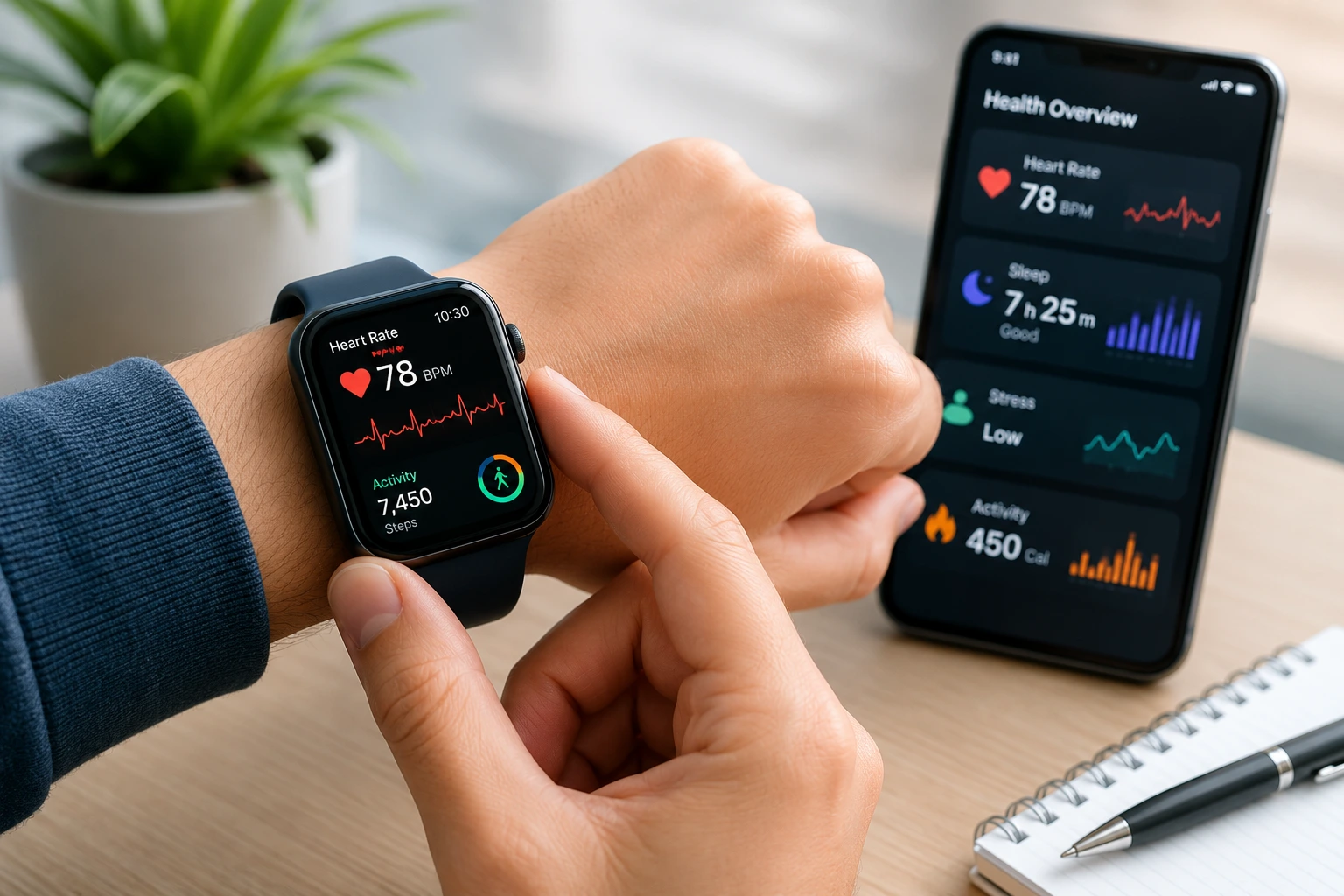
Smartwatches have evolved far beyond step counting. Depending on the model, they may track activity, heart rate, sleep, workouts, and other wellness measurements.
Why Wearables Are Useful
- Activity patterns.
- Exercise habits.
- Sleep schedules.
- Resting heart-rate trends.
- Daily movement.
One major advantage is continuity. A wearable can collect information during normal daily activities instead of relying only on occasional measurements.
Smartwatch and Home Integration
Smartwatch → Smartphone → Health App → Healthcare Professional
4. Smart Scales
Smart scales can turn an ordinary bathroom scale into a connected tracking tool.
Depending on the model, they may record weight and provide additional body measurements or estimates.
Why Trends Matter
Weight naturally fluctuates because of hydration, meals, activity, and other factors. Looking at longer-term trends can therefore be more useful than focusing on a single measurement.
- Weight history.
- Trend tracking.
- Goal monitoring.
- Multiple household profiles.
- Automatic data storage.
5. Smart Medication Dispensers
Medication routines can become complicated, especially when someone takes multiple medicines at different times.
Smart medication dispensers are designed to make medication schedules easier to remember and organize.
| Feature | Potential Benefit |
|---|---|
| Audible reminders | Reminds users about scheduled doses |
| Visual alerts | Provides another reminder method |
| Dose organization | Can reduce confusion |
| Caregiver notifications | May provide additional support |
| Mobile connectivity | Can enable remote monitoring |
The World Health Organization’s assistive technology resources describe how technology can support independence and self-care.
6. Fall Detection Sensors
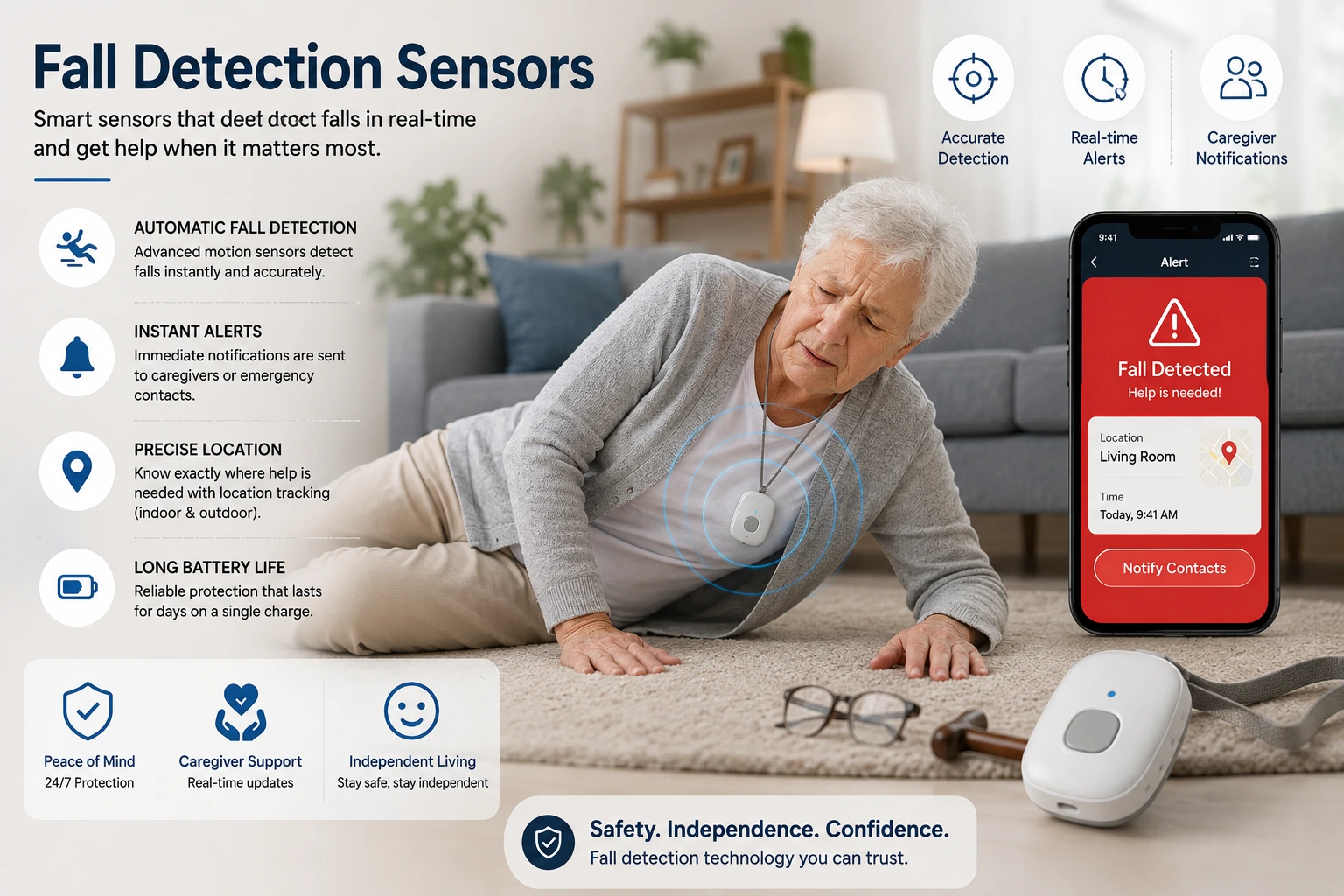
Falls are an important safety concern for many older adults, particularly people who live alone.
Some connected systems use motion sensors, wearable devices, or other technologies to identify possible falls or unusual inactivity.
How Fall Detection Works
Sensor detects unusual movement → System analyzes event → Alert generated → Caregiver notified
No sensor is perfect. False alarms, battery failure, connectivity problems, and installation errors can occur.
7. Smart Sleep Trackers
Sleep is an important part of everyday health, yet many people don’t know how consistent their sleep schedule really is.
Smart sleep trackers can provide estimates about sleep duration, bedtime, wake time, movement, and other nighttime patterns.
Common Sleep Metrics
- Sleep duration.
- Bedtime consistency.
- Wake-up time.
- Movement during sleep.
- Estimated sleep stages.
- Heart-rate trends.
Consumer sleep trackers generally provide estimates rather than definitive medical diagnoses.
8. Smart Air-Quality Monitors
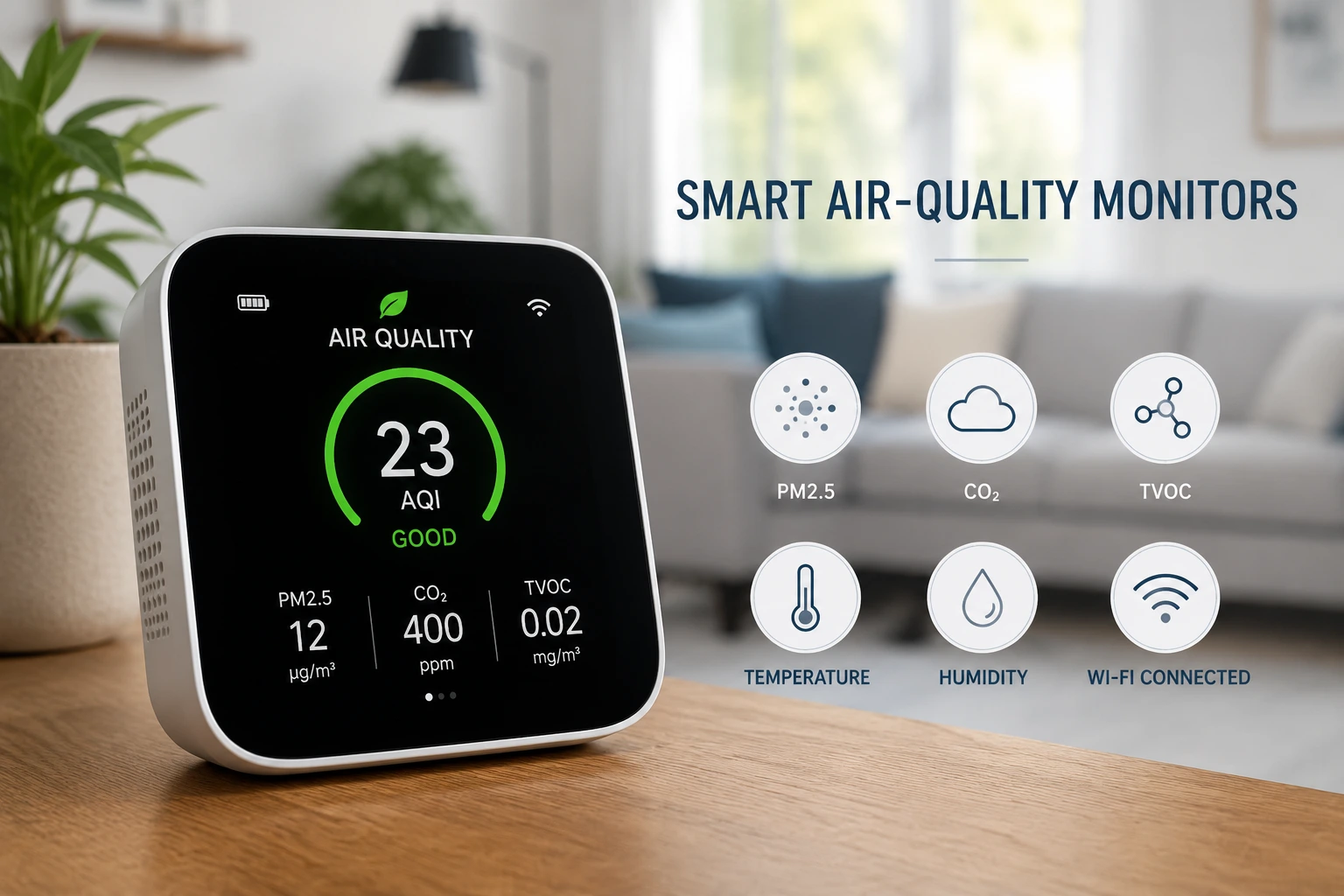
Indoor environmental conditions can influence comfort and well-being.
Depending on the model, air-quality monitors may measure temperature, humidity, particulate matter, carbon dioxide, or volatile organic compounds.
Measure → Understand → Improve
9. Smart Thermostats
Temperature isn’t usually the first thing people associate with healthcare technology, but maintaining a comfortable home environment can support everyday well-being.
- Maintain consistent indoor temperatures.
- Automate heating and cooling.
- Adjust settings remotely.
- Create personalized comfort settings.
- Improve convenience.
Smart thermostats aren’t medical devices, but they can be useful parts of a supportive home environment.
10. Smart Speakers and Voice Assistants
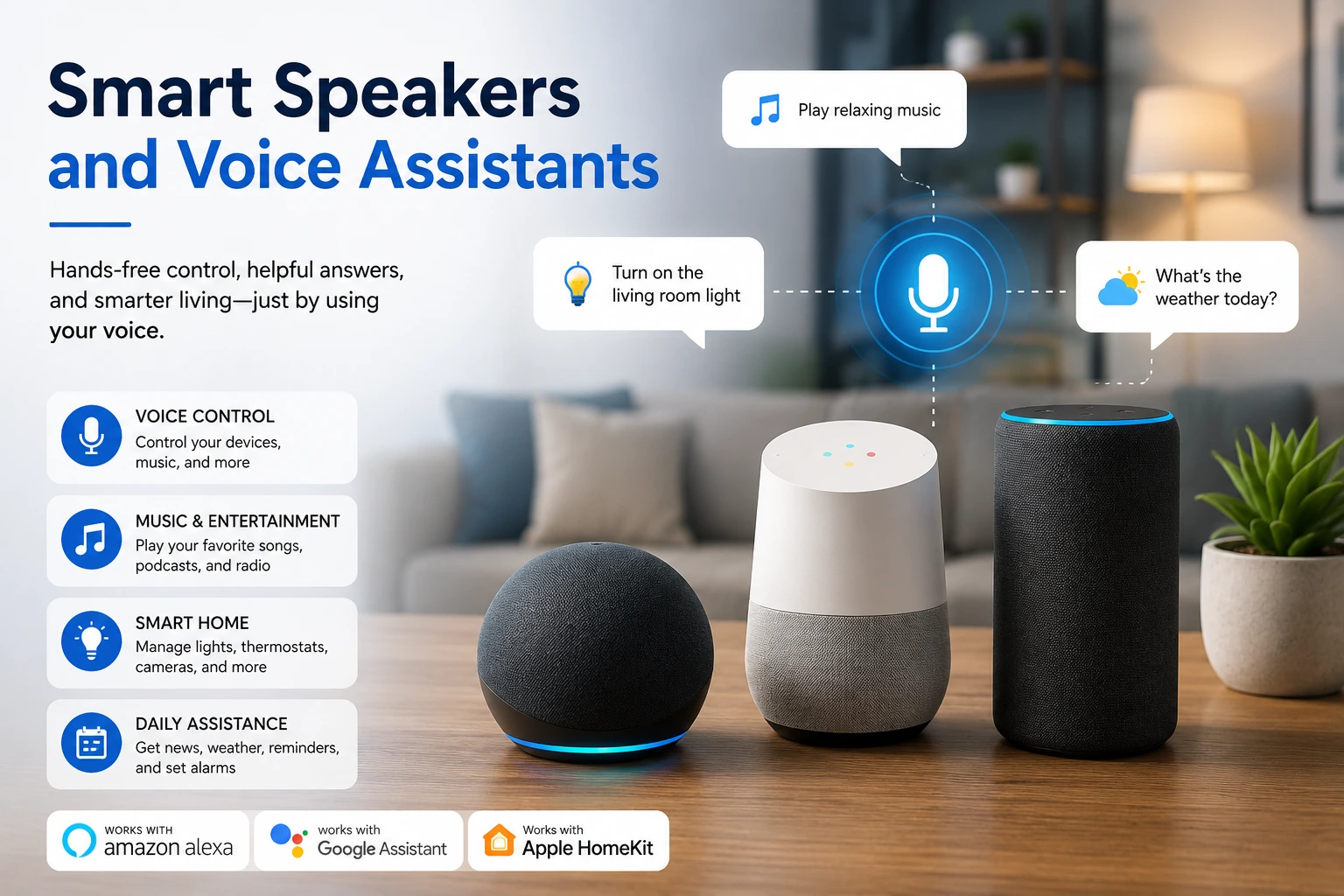
Voice assistants provide something surprisingly valuable: hands-free interaction.
- Medication reminders.
- Appointment reminders.
- Hydration reminders.
- Exercise prompts.
- Emergency contact routines.
- Voice-controlled lighting.
- Household automation.
For people with mobility or vision difficulties, voice control may provide another layer of accessibility.
How Smart Home Devices for Healthcare Work Together
The real revolution isn’t necessarily one gadget. It’s the connected ecosystem.
| Device | Health or Safety Role |
|---|---|
| Blood pressure monitor | Blood pressure tracking |
| Glucose monitor | Glucose monitoring |
| Smartwatch | Activity and selected health measurements |
| Smart scale | Weight trends |
| Medication dispenser | Medication reminders |
| Fall sensor | Safety alerts |
| Sleep tracker | Sleep patterns |
| Air monitor | Indoor environmental information |
| Smart thermostat | Temperature management |
| Voice assistant | Hands-free control |
When compatible technologies work together, the home can become a more supportive environment for monitoring, safety, reminders, and accessibility.
Smart Healthcare Technology and Healthy Living
Smart technology works best when it becomes part of a wider healthy lifestyle. Connected devices can support awareness, but nutrition, physical activity, sleep, preventive care, and professional medical guidance remain essential.
Explore more health information and wellness resources on AppleVita .
Connected technology can complement healthy habits by helping people create consistent routines around sleep, activity, medication, and preventive health.
Smart Home Healthcare Technology for Older Adults
One of the most important applications of smart home devices for healthcare is supporting independent living.
Connected technologies may support older adults through:
- Remote monitoring.
- Fall alerts.
- Medication reminders.
- Communication tools.
- Environmental automation.
- Health tracking.
- Telemedicine support.
The best technology should adapt to the person using it. Simple systems are often easier to adopt than complicated platforms filled with unnecessary features.
Privacy and Security for Smart Healthcare Devices
More connected devices mean more health-related data. That’s useful, but it also creates privacy and cybersecurity considerations.
Questions to Ask Before Buying
- What information does the device collect?
- Where is the information stored?
- Is the information encrypted?
- Can you delete your data?
- Who can access your information?
- Does the company share information with third parties?
- Can unnecessary data collection be disabled?
Basic Security Practices
- Use unique passwords.
- Enable two-factor authentication when available.
- Keep device software updated.
- Secure your home Wi-Fi network.
- Review application permissions.
- Replace devices that no longer receive security updates.
How to Choose the Best Smart Home Devices for Healthcare
Don’t buy ten devices simply because a list recommends ten devices. Start with the health or safety problem you actually want to solve.
1. Identify Your Health Goal
Decide whether you want to monitor blood pressure, improve medication routines, track sleep, increase activity, improve home safety, or monitor your indoor environment.
2. Consider the User
A device that works perfectly for a technology enthusiast may be frustrating for an older adult or someone with accessibility needs.
3. Check Accuracy and Reliability
For health-monitoring products, look for reputable manufacturers and appropriate validation.
4. Check Privacy Features
Review the manufacturer’s privacy policy and understand how health-related data is collected and shared.
5. Have a Backup Plan
Critical healthcare needs should never depend on one smart device. Batteries can fail, internet connections can stop working, and software can malfunction.
Smart Healthcare Device Buying Checklist
| Priority | What to Look For |
|---|---|
| Accuracy | Appropriate validation and reliable measurements |
| Ease of use | Simple controls and clear instructions |
| Connectivity | Stable Bluetooth or Wi-Fi where required |
| Privacy | Transparent data policies |
| Security | Regular software and firmware updates |
| Compatibility | Works with your smartphone or preferred platform |
| Accessibility | Suitable for the intended user |
| Support | Reliable customer and technical support |
The Future of Smart Home Healthcare
The next generation of smart home devices for healthcare will likely focus less on isolated gadgets and more on connected ecosystems.
Artificial intelligence, remote monitoring, voice interfaces, sensors, wearable technology, and health platforms could increasingly work together.
This could allow homes to recognize changes in routines and provide useful reminders or alerts.
Automation should support human care, not eliminate it.
A smart home can collect information. A healthcare professional can interpret it. A caregiver can provide support. A family member can provide reassurance.
Frequently Asked Questions About Smart Home Devices for Healthcare
What are smart home devices for healthcare?
Smart home devices for healthcare are connected technologies designed to support health monitoring, safety, accessibility, medication routines, environmental management, or communication at home.
Can smart home devices replace a doctor?
No. Smart devices can collect information and support daily routines, but they don’t replace professional diagnosis or medical care.
Are smartwatches medical devices?
It depends on the specific product and feature. Some smartwatch functions are intended for general wellness, while certain products may have specific regulatory authorization for particular health functions.
Are smart home healthcare devices useful for older adults?
They can be. Fall detection, medication reminders, voice control, remote monitoring, and environmental automation may support independence and safety.
Do smart healthcare devices need Wi-Fi?
Not always. Some devices use Bluetooth, cellular connectivity, or operate independently. Others require Wi-Fi for cloud synchronization or remote notifications.
Are smart health devices safe for privacy?
Privacy depends on the device, manufacturer, software, and configuration. Review the privacy policy, permissions, account security, and data-sharing practices before purchasing.
What is the best smart home device for healthcare?
There isn’t one universal best device. The right choice depends on your health goal. A blood pressure monitor may be useful for blood pressure tracking, while a medication dispenser may be more useful for medication reminders.
Can smart home devices help people live independently?
Yes. They can support independence through reminders, automation, monitoring, and safety alerts.
Should I buy several smart healthcare devices at once?
Usually, no. Start with one important health or safety goal and add technology gradually.
Can smart home healthcare technology improve the future of healthcare?
Potentially, yes. Connected technologies can support remote monitoring, accessibility, prevention, and independent living. Privacy, cybersecurity, accessibility, interoperability, and professional oversight remain important.
Conclusion: Build a Smarter and Healthier Home
The future of healthcare isn’t necessarily a hospital filled with futuristic machines. It may also be a home that quietly helps people make better health decisions every day.
The 10 smart home devices for healthcare covered in this guide—from connected blood pressure monitors and glucose technology to fall sensors, medication dispensers, sleep trackers, and voice assistants—show how technology can become part of everyday health management.
But there’s no need to go overboard.
Identify a problem → Choose the right technology → Protect your data → Use information responsibly → Keep healthcare professionals involved.
Smart technology works best when it supports real human needs. As digital health continues to evolve, the most valuable innovation may not be the device with the most features.
It may be the technology that makes healthy living simpler, safer, and more accessible.